The Third Space: Rituals That End Work Before Home Begins
The commute, for all its faults, performed a service: a buffer where work-you decompressed into home-you. Remote work deleted it, and the two selves now collide at a laptop lid. Transition rituals rebuild the third space — the deliberate ten minutes that end work properly.

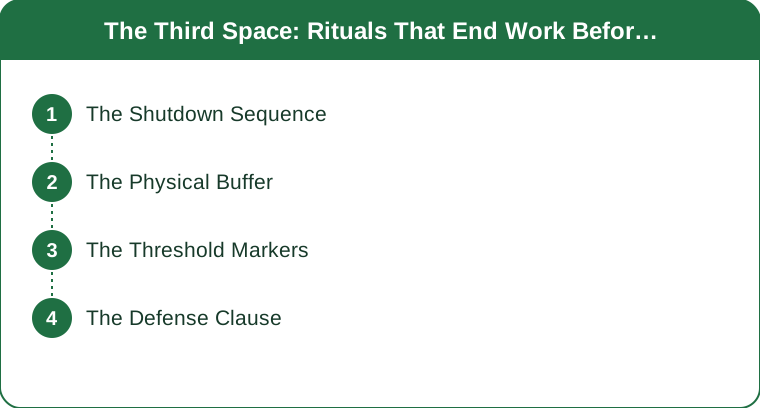
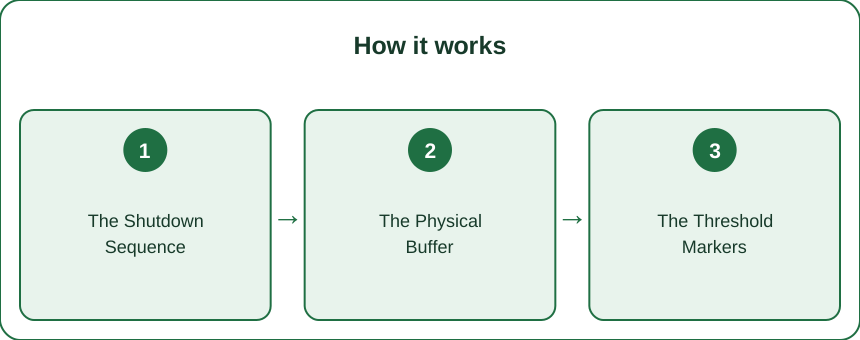
The Shutdown Sequence
The ritual borrowed from productivity research: tomorrow’s top three written down (open loops closed on paper stop reopening at dinner), inbox given its last look, laptop CLOSED fully and ideally out of sight. The sequence tells the brain what the commute used to: shift’s over.
The Physical Buffer
The fake commute earns its second citation: a ten-minute walk around the block ‘arriving’ home, or the balcony-and-beverage decompression, or the change-of-clothes ritual (work clothes off = work self off; loungewear as the uniform of the evening shift). The body’s state change drags the mind’s along.

The Threshold Markers
Small sensory switches mark the border: the evening playlist, the candle lit at six, the phone dropped into its overnight tray. Ritual objects do boundary work language can’t — the candle is not decor; it is a border checkpoint with a scent.
The Defense Clause
The ritual survives on protection: the ‘one last email’ habit is the border’s smuggler (it reopens every loop the sequence closed), and the household treaty (transition minutes acknowledged as off-limits) keeps the buffer real. Ten guarded minutes buys the whole evening’s presence — the commute charged forty.
Write the three, close the lid, walk the block, light the border candle. The commute’s one gift was the buffer — rebuild it in ten minutes and the evening finally starts when work ends.
Keep Reading
This article is for general informational and styling purposes only. Fit, sizing, and product availability may vary.