Micro-Rituals for the Workday: The Tiny Ceremonies That Structure Chaotic Days
The workday’s chaos isn’t fixed by bigger systems but by smaller ones — the micro-rituals, thirty-second ceremonies that mark transitions, protect focus and give shapeless days a skeleton. The workday micro-ritual guide: the mechanics, the map and the craft.

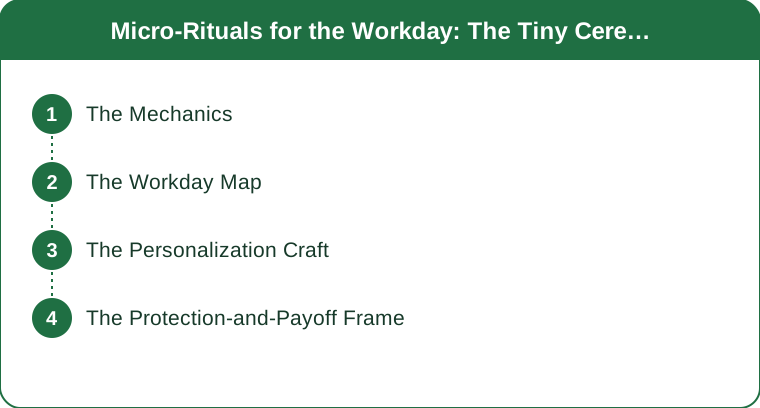
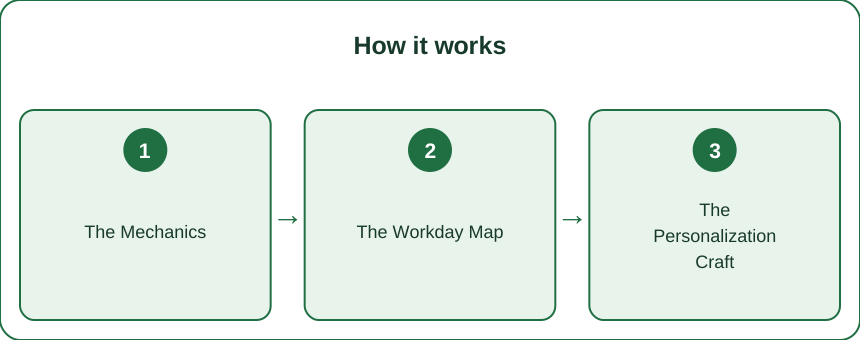
The Mechanics
Why tiny ceremonies work: the transition function (the brain needing boundary markers between modes — the ritual as the cognitive gear-shift; the work-home transitions from the transition doctrine at hourly scale), the attention-reset effect (the deliberate thirty seconds interrupting the blur — the mindful moment from the mindfulness doctrine embedded in routine), the control psychology (the ritual as the controllable island in chaotic days — the anchor when meetings metastasize; the agency restored in small ceremonies per the stress doctrine), the habit-trigger role (the ritual as the cue that launches focus blocks — the same-sequence start that tells the brain ‘now we work’ per the habit doctrine), and the distinction note (the ritual differing from routine by INTENTION — the coffee made mindlessly being routine, the coffee made deliberately being ceremony; the attention being the active ingredient per the ritual doctrine).
The Workday Map
Rituals by slot: the day-opening ceremony (the arrival ritual — the desk cleared, the water filled, the one-line intention written from the journal doctrine; the two-minute launch that replaces the drift-into-email), the focus-block starter (the deep-work entry ritual — the headphones on, the phone drawered, the timer set; the same sequence every time per the focus doctrine), the between-meetings reset (the thirty-second ceremony — the stand-stretch-breathe from the movement-snack doctrine; the one physiological sigh from the breath doctrine; the previous meeting released before the next), the lunch boundary (the eaten-away-from-desk ritual — the meal marked as a real break per the lunch doctrine; the post-lunch walk as the afternoon’s opening ceremony), the afternoon-slump ritual (the 3pm tea ceremony — the kettle-to-cup deliberateness as the reset; the slump met with ritual instead of scroll per the energy doctrine), the day-closing ceremony (the shutdown ritual — the tomorrow-list written, the tabs closed, the desk reset; the work ENDED deliberately per the boundary doctrine; the commute-or-threshold ritual for the WFH per the transition doctrine), and the selection note (the two-three rituals being plenty — the full map being a menu, not a mandate per the minimal doctrine).

The Personalization Craft
Making them yours: the sensory anchoring (the ritual given a sense — the specific mug, the desk plant watered, the hand cream applied; the physical anchor that makes it real per the sensory doctrine), the duration honesty (the thirty-seconds-to-two-minutes ceiling — the ritual that takes ten minutes being a break, not a ritual; the smallness being the survival trait), the personality fit (the introvert’s silent tea versus the extrovert’s colleague-greeting round — the temperament-matched ceremonies per the temperament doctrine), the meaning layer (the ritual attached to a value — the intention line connected to the why; the ceremony that carries meaning outlasting the empty habit per the meaning doctrine), the workplace-visibility calibration (the rituals invisible or normalized — the headphone signal that colleagues learn; the boundary communicated per the workplace doctrine), and the experiment protocol (the one ritual trialed two weeks — the keep-adjust-drop review per the experiment doctrine).
The Protection-and-Payoff Frame
Keeping them alive: the busy-day paradox (the chaotic days needing rituals MOST and skipping them first — the ritual shrunk to ten seconds rather than dropped; the anchor held in storms per the flexibility doctrine), the meeting-culture defense (the back-to-back calendar fought with ritual buffers — the five-minute gaps booked; the transition time claimed per the calendar doctrine), the slip-recovery grace (the ritual lapsed and resumed without ceremony-about-the-ceremony — the restart being one deliberate coffee away per the habit-repair doctrine), the compounding payoff (the day with three small ceremonies feeling structured — the week feeling less blurred per the time-perception doctrine; the burnout resistance built thirty seconds at a time per the burnout doctrine), the spillover effect (the workday rituals teaching the ritual skill — the evening and seasonal ceremonies from the respective doctrines following), and the closing image (the chaotic Tuesday held together by a deliberate coffee, a drawered phone and a written tomorrow-list — the day given a skeleton; the chaos, still chaotic, now navigable; the ceremony, tiny and load-bearing). Open deliberately, reset between, close completely: the workday, structured by ceremony.
Micro-rituals are thirty-second ceremonies that mark transitions: a deliberate desk-opening, a focus-block entry sequence, a between-meetings sigh, a shutdown list. Intention is the active ingredient, two-three rituals suffice, and on chaotic days shrink them to ten seconds rather than skip them.
Keep Reading
This article is for general informational and styling purposes only. Fit, sizing, and product availability may vary.